


Black Friday - KT301P Circuit Breaker Finder review – For frustration free finding
HURRY! ONLY 250 LEFT IN STOCK.
98% customer buy 3-5 items to use daily and gifts for their beloved one
People are viewing right now
Sale ending in 13 08


HURRY! ONLY 250 LEFT IN STOCK.
98% customer buy 3-5 items to use daily and gifts for their beloved one
People are viewing right now
Sale ending in
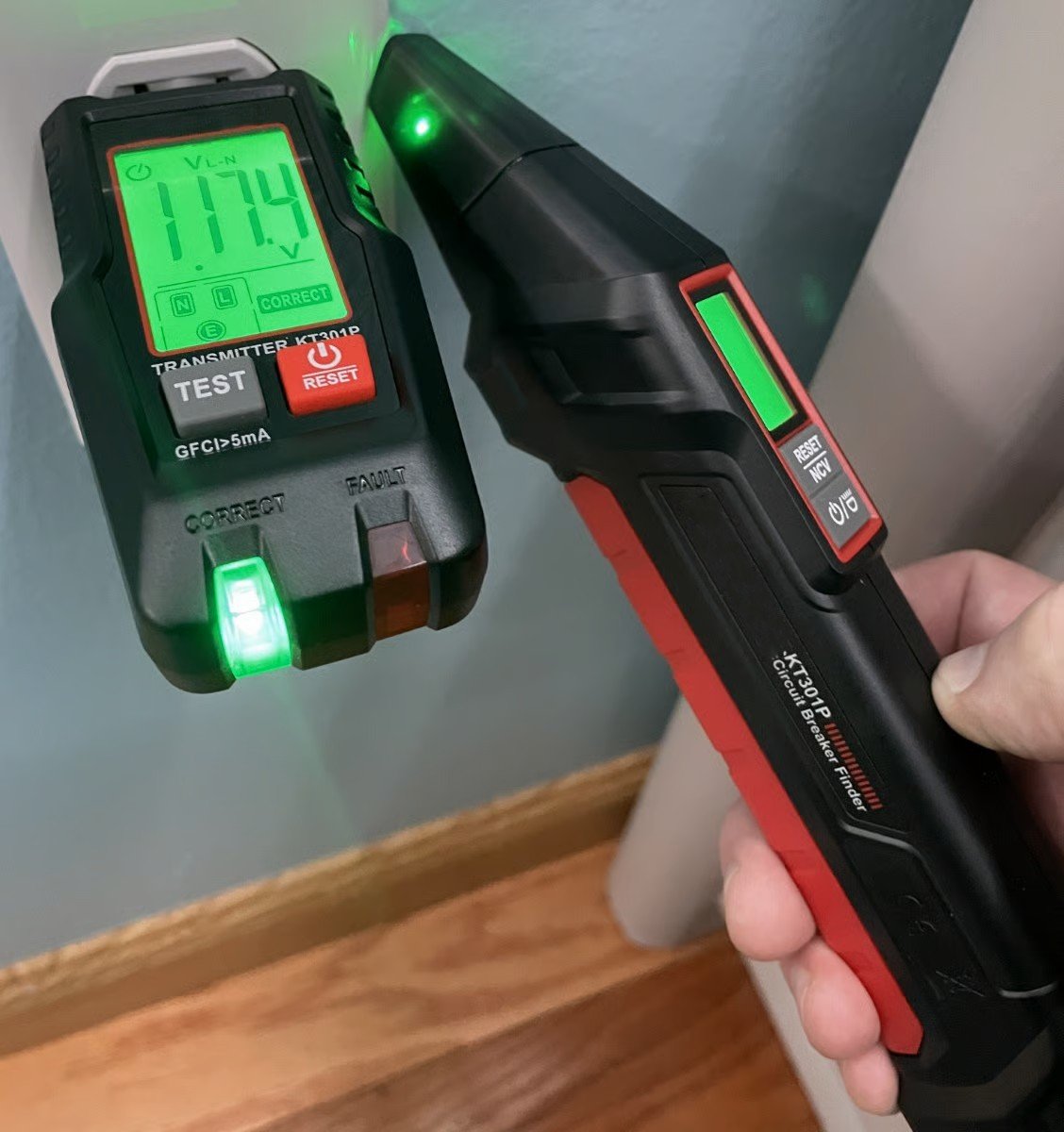
REVIEW – I think most homeowners have experienced the “yell-real-loud-when-this-light-turns-off” scenario. You know the one: you post your loved one next to a bulb or outlet-plugged device while you trek to the circuit breaker panel, flipping switches one by one until you either plunge the entire house into darkness or finally hear them screaming, “That’s it!!” from two rooms away. It’s frustrating, it wastes time, and there’s always that moment when you accidentally kill power to something important. The KT301P Circuit Breaker Finder eliminates all of that.
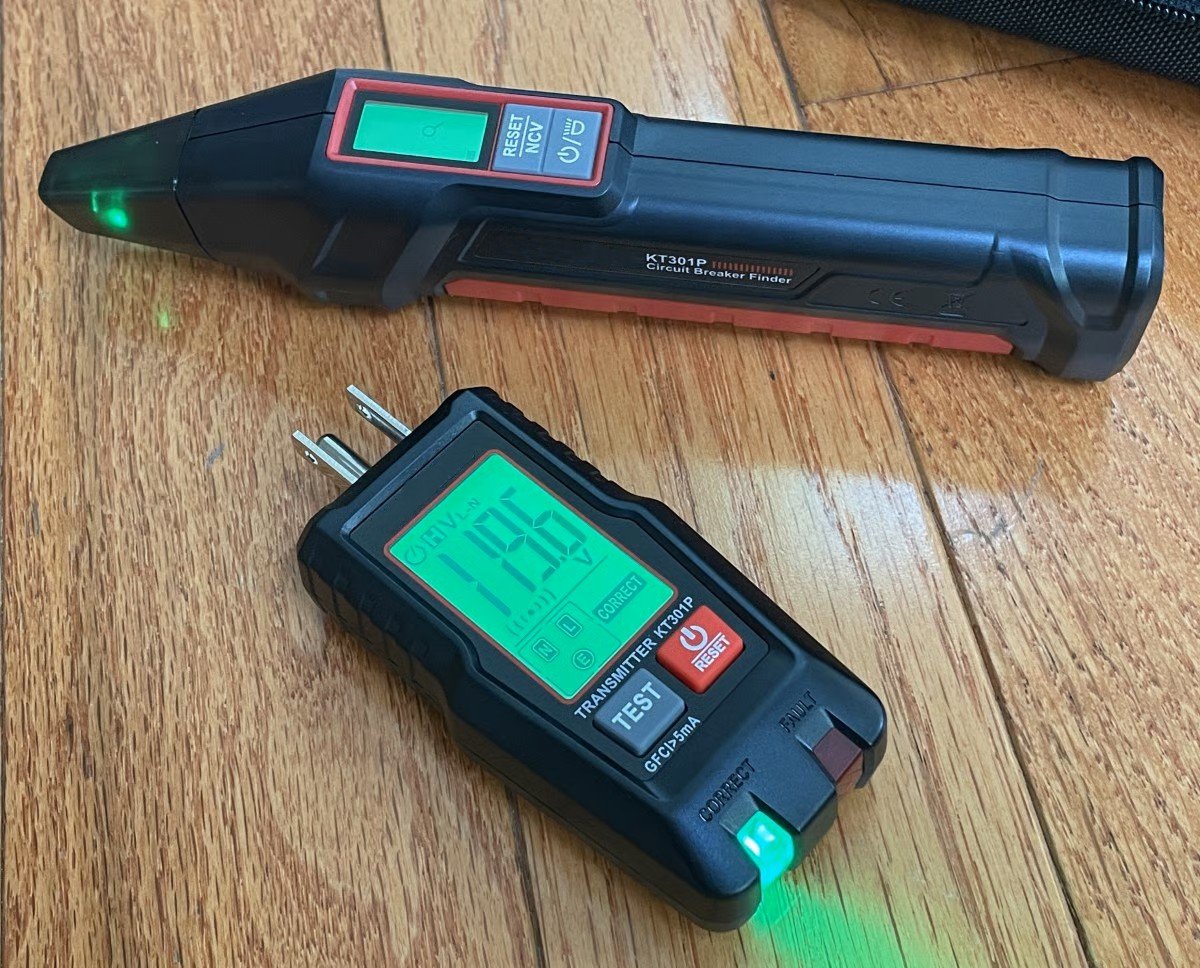
The KT310P is a battery-powered electrical device that sends a signal from an electrical outlet, light socket, or exposed wires to a handheld receiver, which detects the signal to determine the correct power circuit.
We’ve all done it – After turning off all the breakers to find the one you need, the fun part starts: It takes 20 minutes to reset the microwave clock, figure out why that one Wi-Fi gadget won’t restart, and explain to the kids why you just disconnected them from the most epic gaming session ever and ruined their high score and chance of being the world champion of, um, whatever that darn game is. Then, you need to return to whatever the project was that caused you to turn the breaker off in the first place – a loose socket, a broken bulb, or adding a new circuit.
As the “go-to” guy for many of my family and friends, I’ve traced circuits hundreds of times. Admittedly, there have been times (when there was no one to yell at the other end), I turned off the circuit for the entire house instead of dealing with the hassle. I’ve used a myriad of circuit breaker finders and tracers, and was looking forward to giving KT310P a spin.
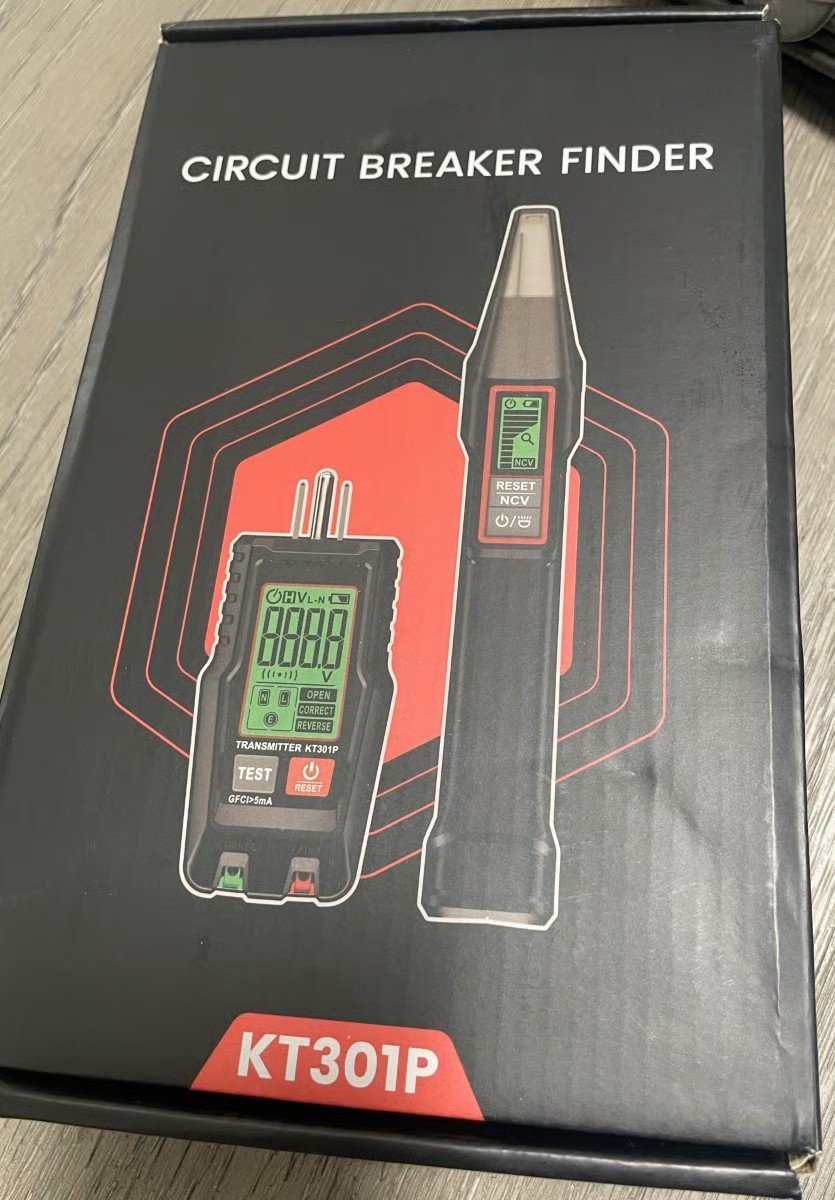
It arrived in an attractive full-color box.
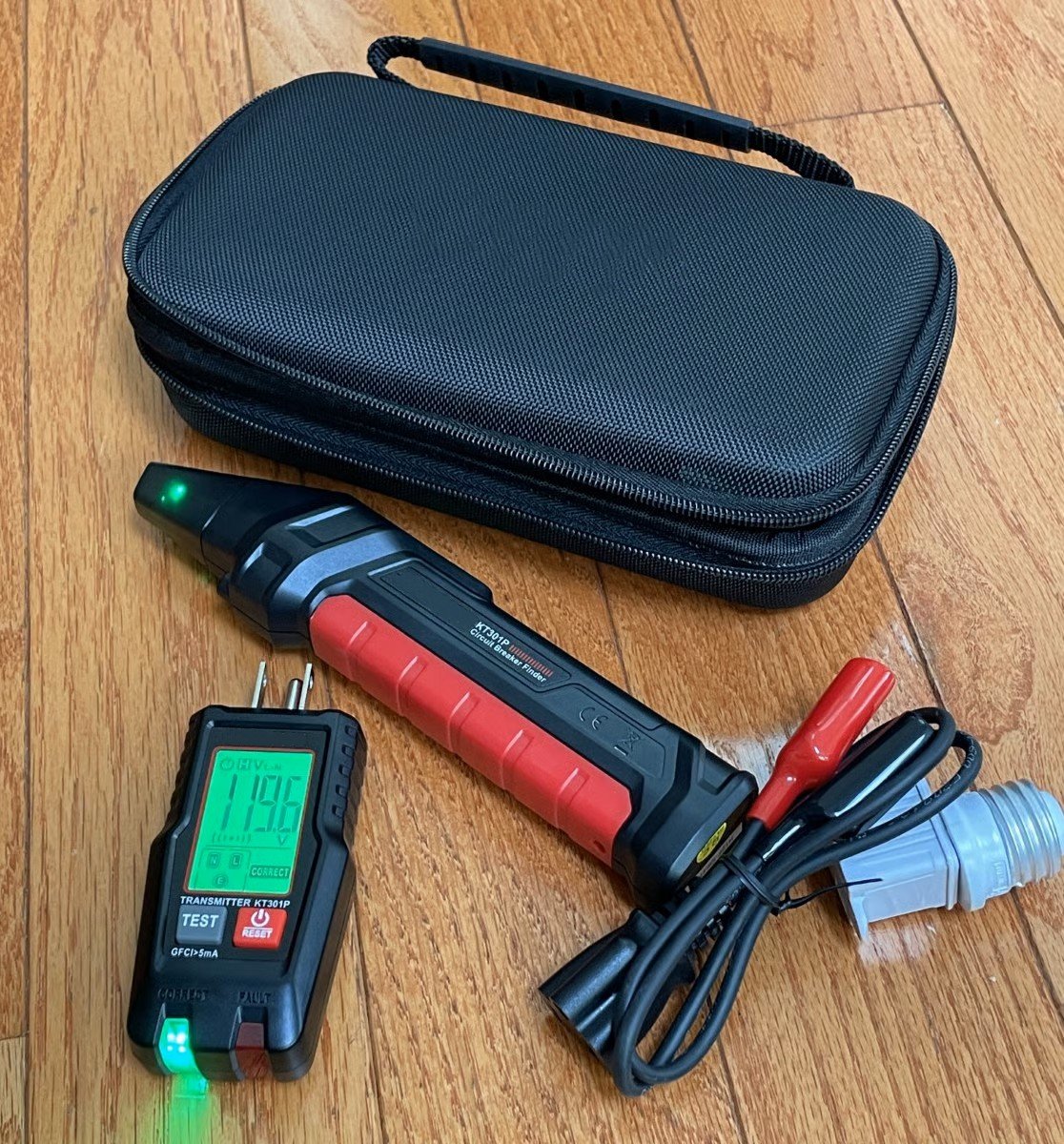
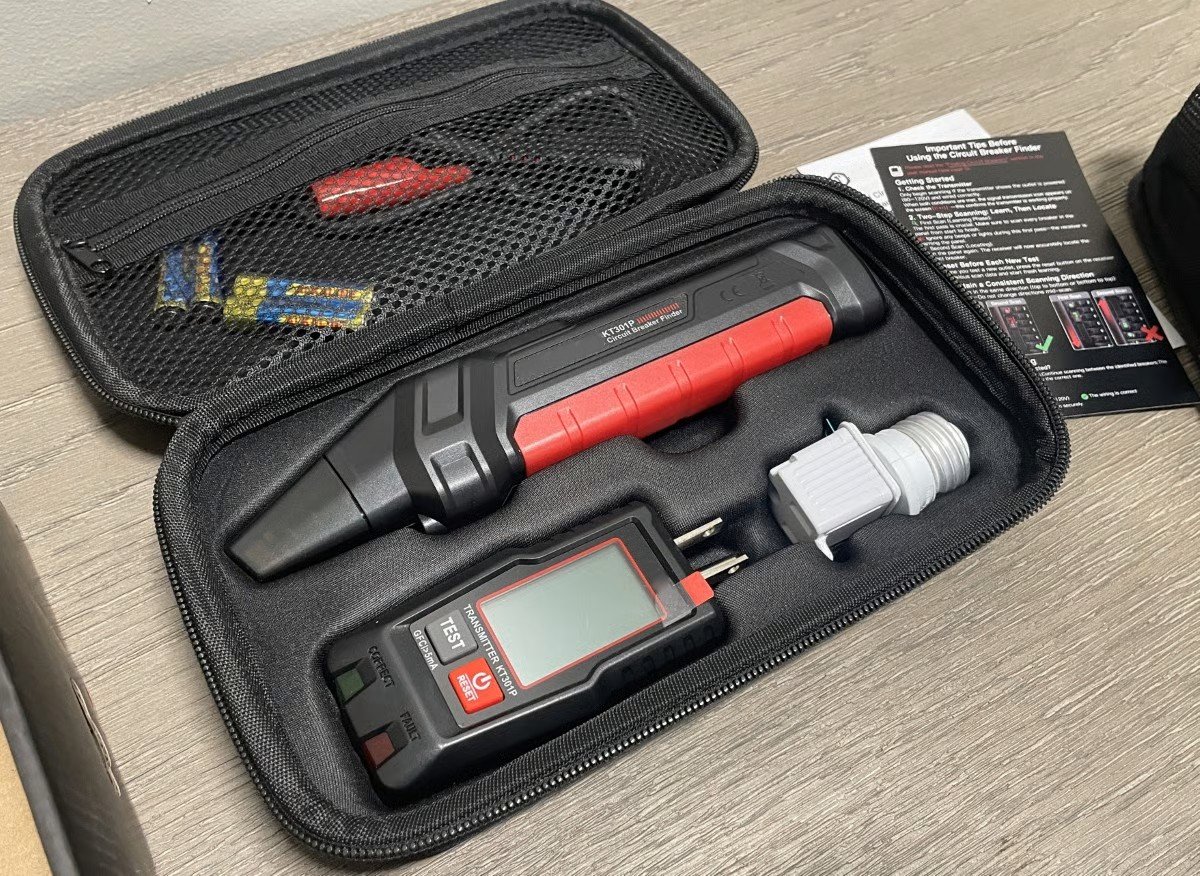
The components nestle in a handsome fitted case. always does a great job of protecting their equipment.
I was impressed by the inclusion of bulb, non-grounded socket, and wire-pigtail (bare wire) adapters.
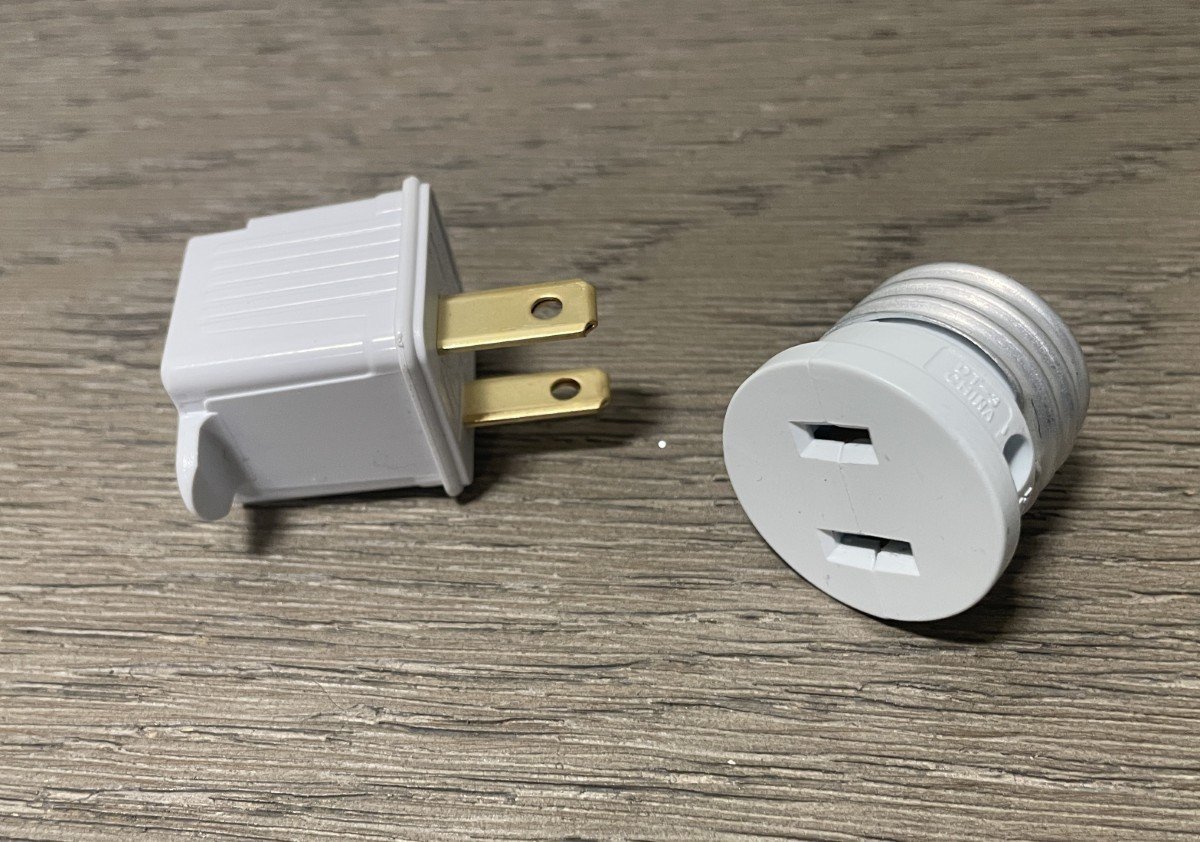
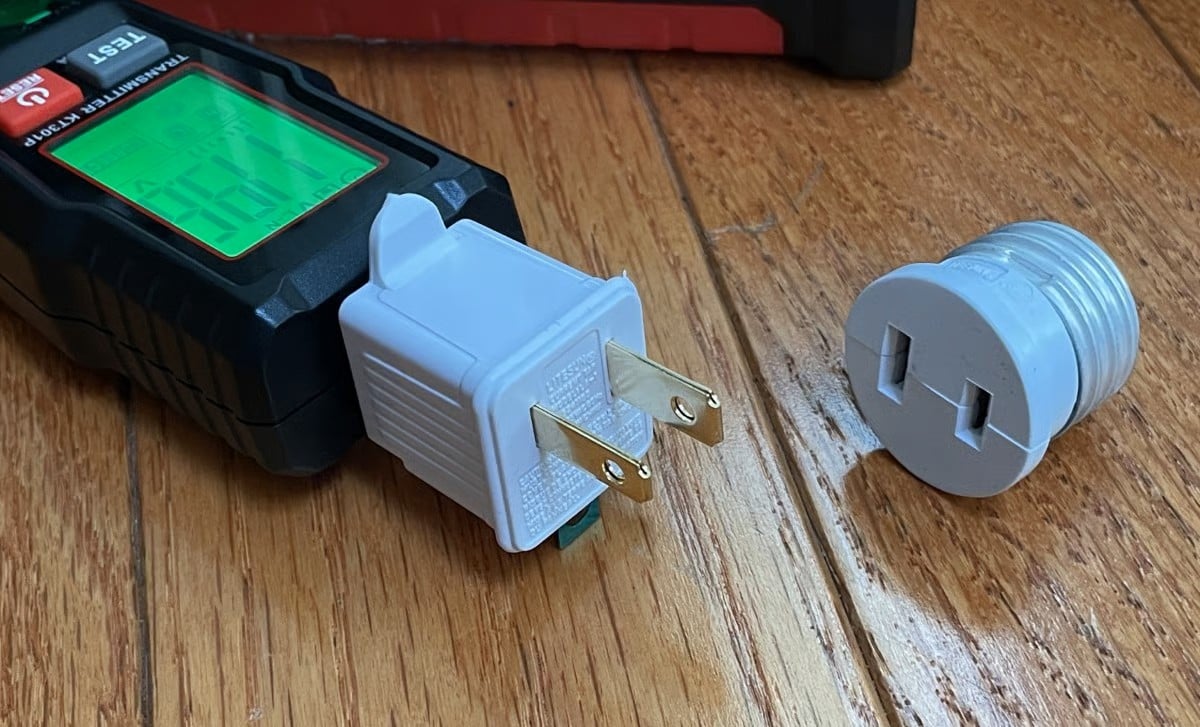
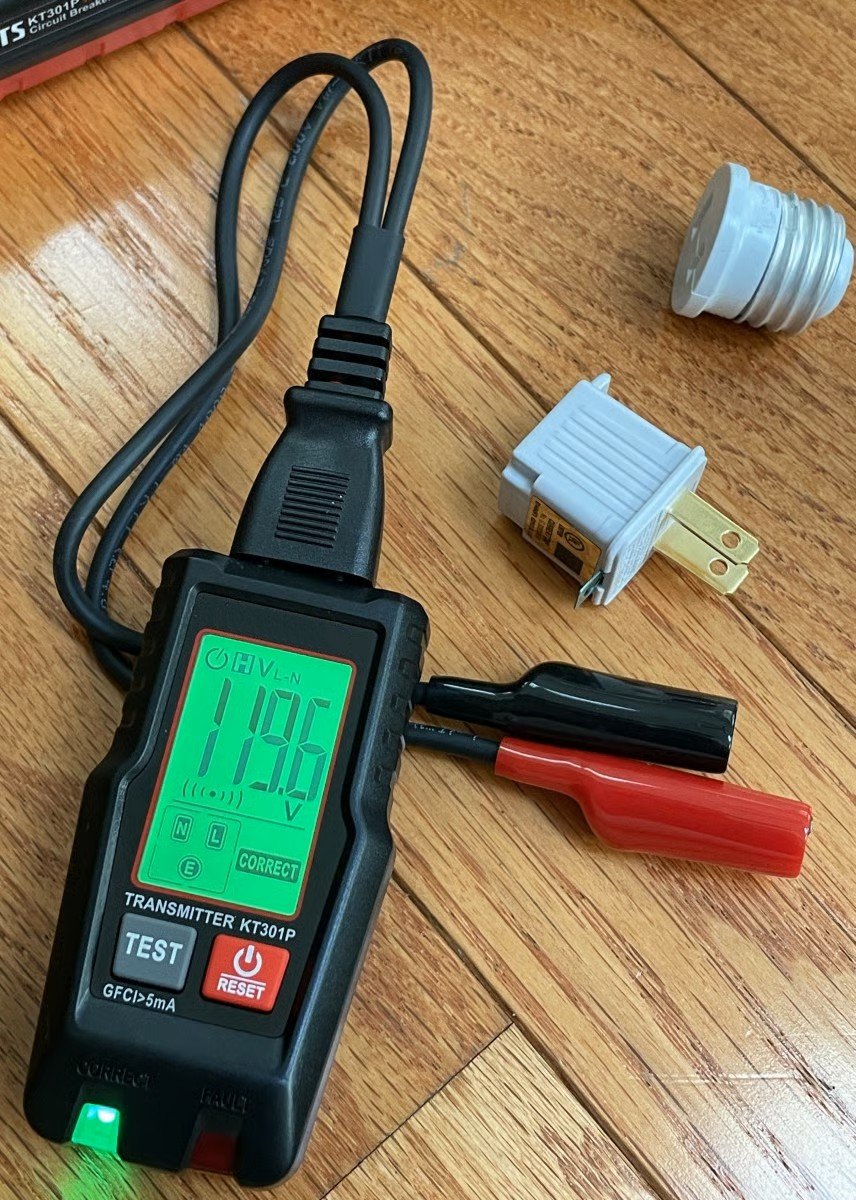
The detector pen feeds on a pair of included AAA batteries. You’ll need a small screwdriver to access the compartment.
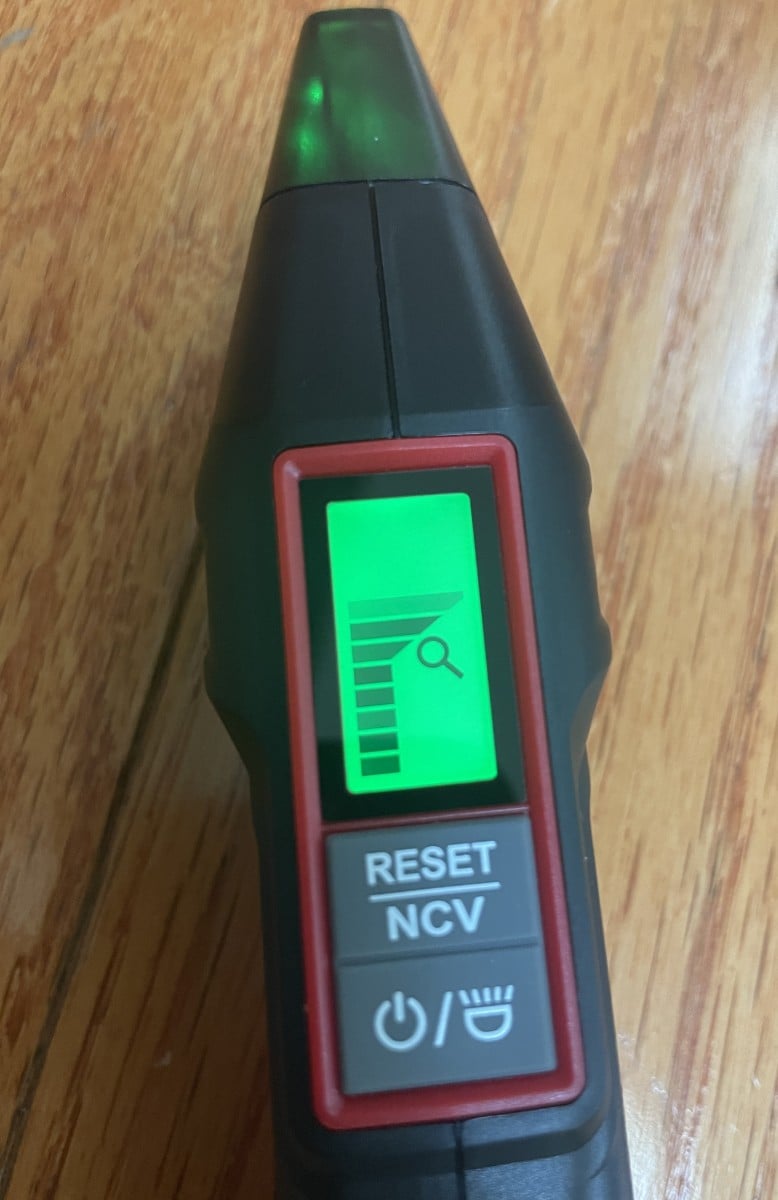
The receiver pen has two buttons: power and Reset/NCV. Perform a reset before every scan (I’ll explain this later). Holding the power button toggles the LED light in the tip. A backlit LCD shows power, battery, and NCV status, scan mode (magnifying glass icon), and signal strength. If left unused for 5 minutes, the wand turns off.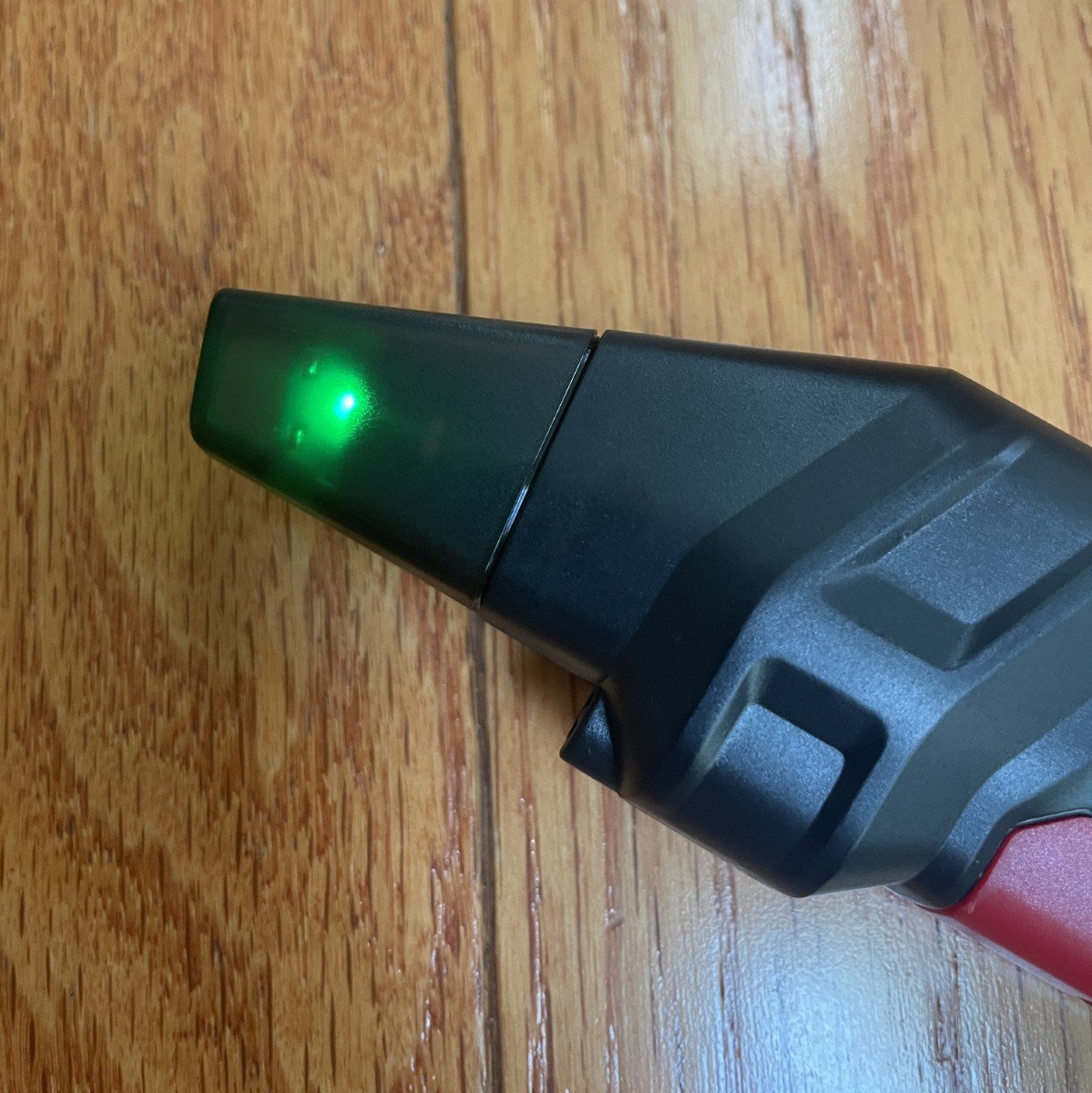
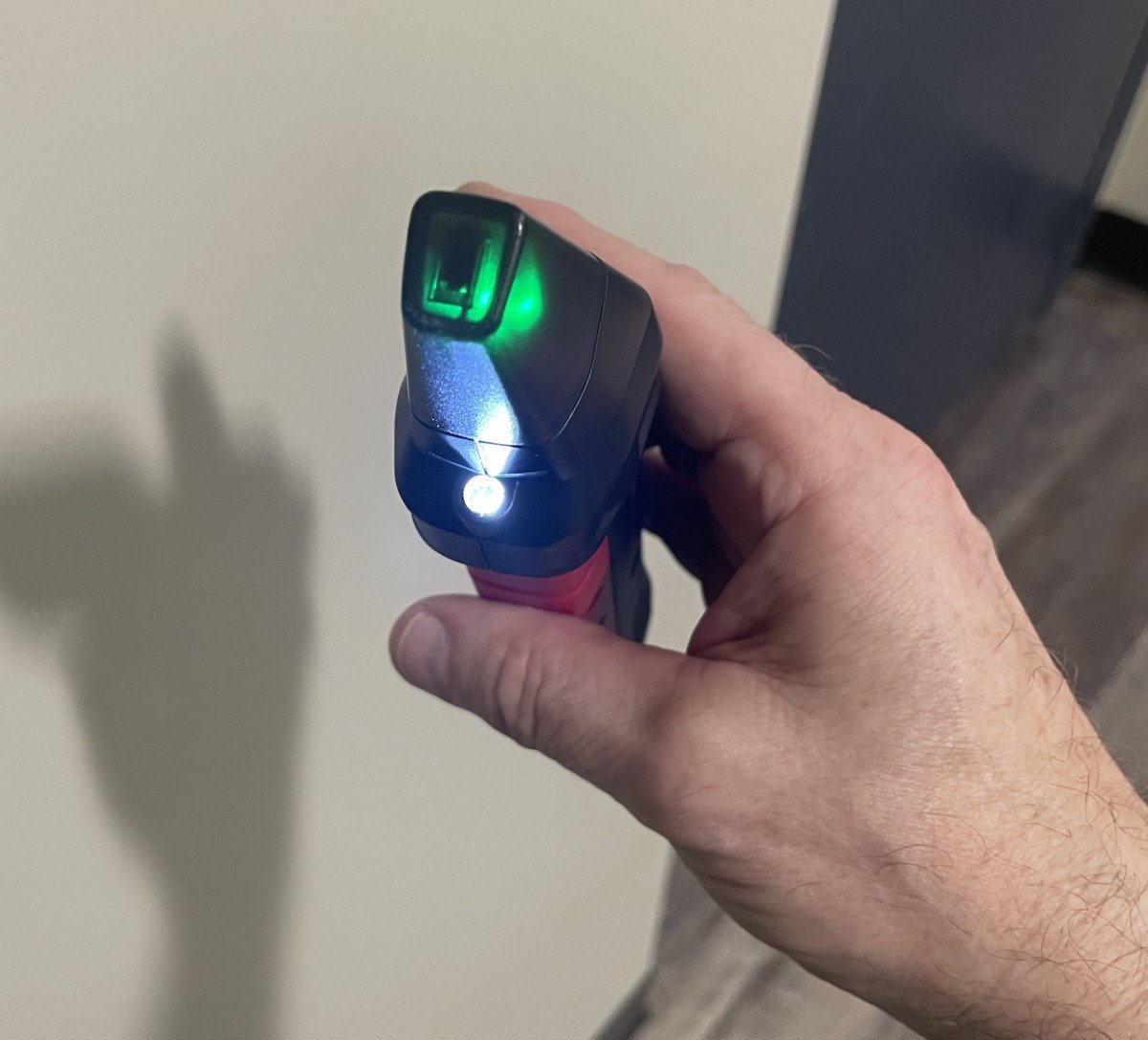
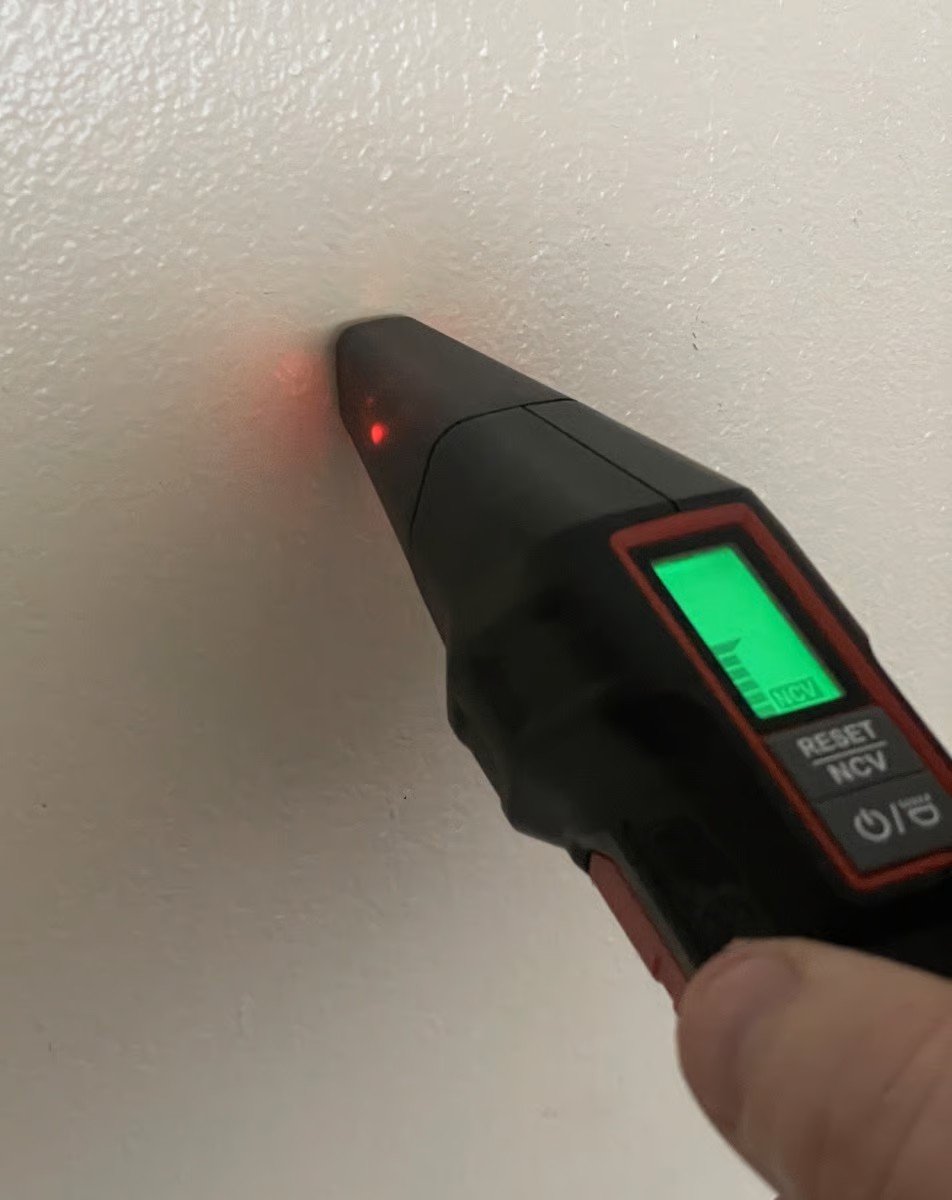
NCV (non-contact voltage) detection activates a sensor at the tip that detects power presence, flashes a red light, and beeps. The detection distance is an inch or so, but in some cases, it’s sensitive enough to detect live wires inside a wall. NCV works independently of the transmitter.
Speaking of the transmitter, it runs on two AAA batteries, too. I hope you led onto that small screwdriver. By the way, the screws aren’t captive, so be sure they don’t try to escape onto the floor or under the counter.
Two buttons turn the transmitter on/off and initiate a GFCI test. A GFCI (ground-fault circuit interrupter) equipped circuit monitors the current between the hot and neutral wires and opens the circuit if they differ. The GCFI test button does nothing on circuits without GFCIs, but if equipped, it will trip the GFCI device.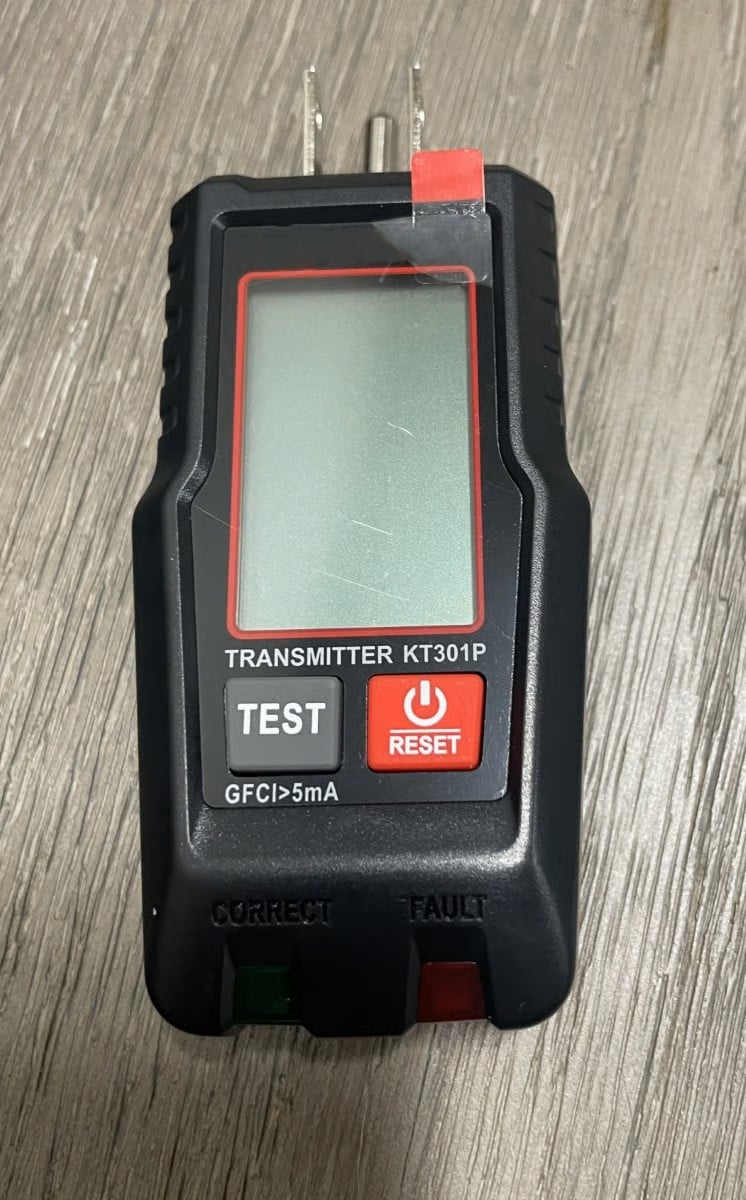
The transmitter’s backlit display indicates power, hold, phase, battery, voltage, signal, wiring conditions (neutral, live wire, and earth ground), and wiring status (open circuit, correct, and reversed neutral and hot). If the wiring to the socket is correct, the “transmitting” icon flashes, the voltage displays, and the wiring condition is “correct.”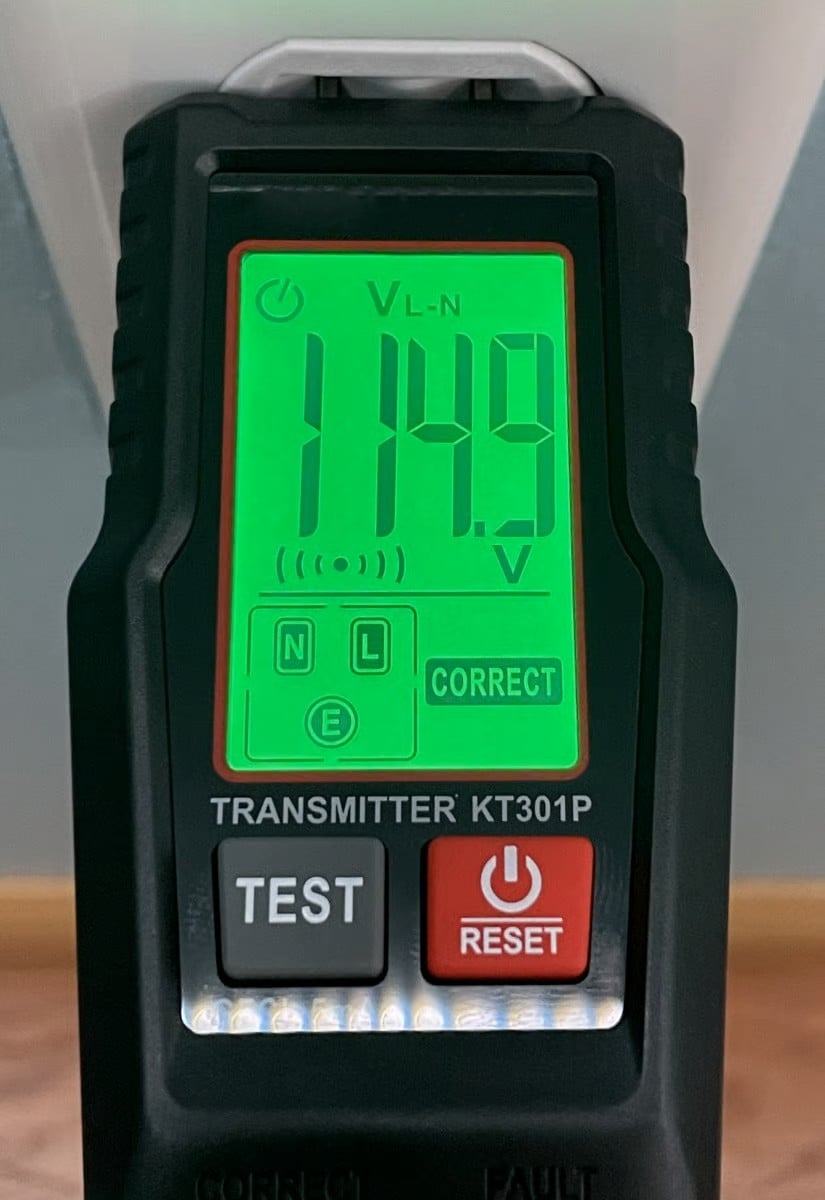
To use the circuit breaker-finding capabilities, turn on the transmitter and receiver, then plug the transmitter into a socket. It’s worth noting that if the outlet you’re testing is “ground up,” the display will face down. was wise to implement a “hold” function that retains data on the display after unplugging.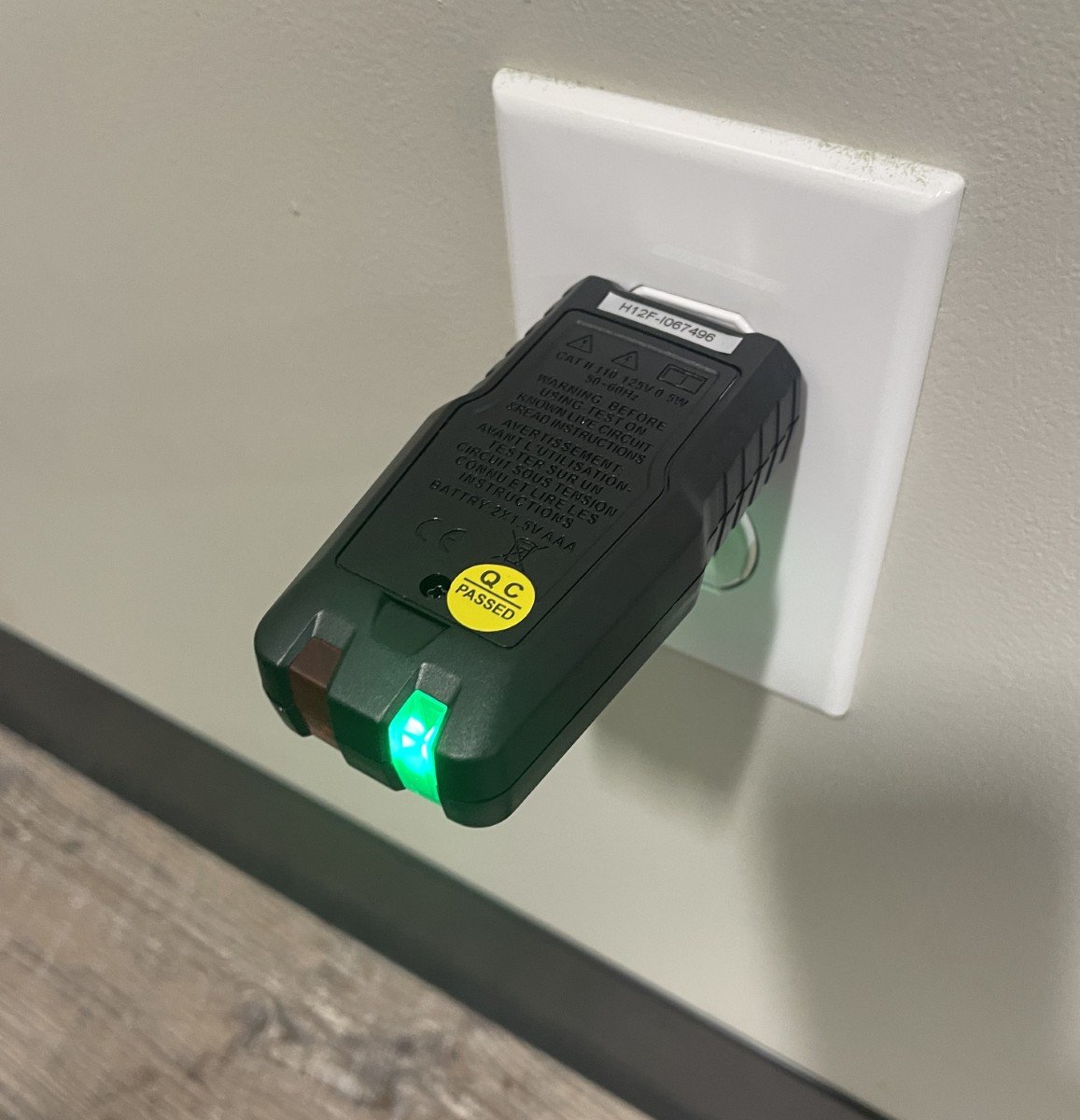
The receiver’s “scan” (magnifying glass) icon should be on. If it’s not (or if you’ve already scanned), press the reset button. Next, with the receiver sensing tip perpendicular to the breakers, scan the tip across all the breakers once. The first pass “learns” the signal environment and may beep a few times. When scanning finishes, the magnifying glass should turn off.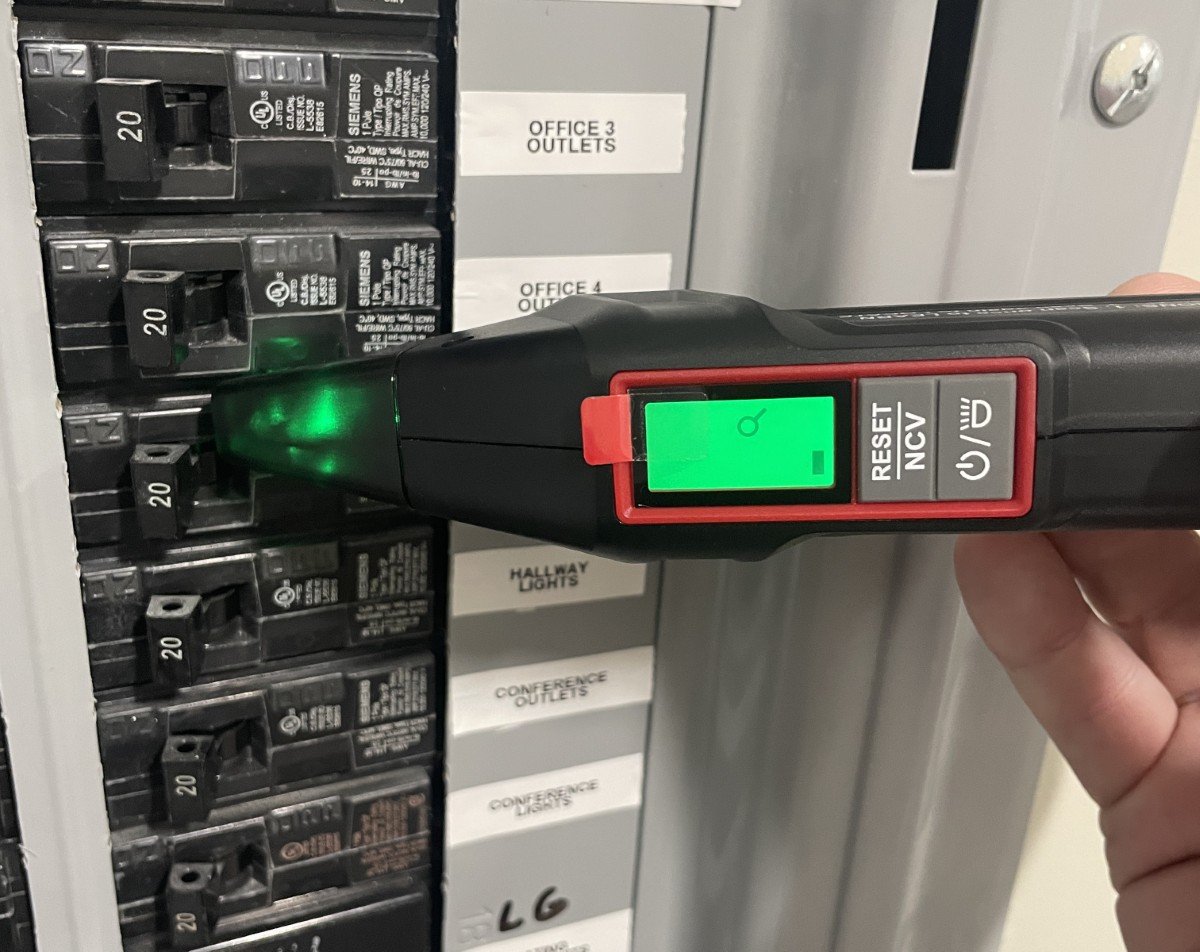
Scan the breakers in the same direction again. The receiver will beep when it finds the right one. If more than one is detected, keep scanning, and the receiver will figure out which one is the right one. It takes a bit of practice, but on multiple tests, the KT301P found the correct circuit every time. Bravo !
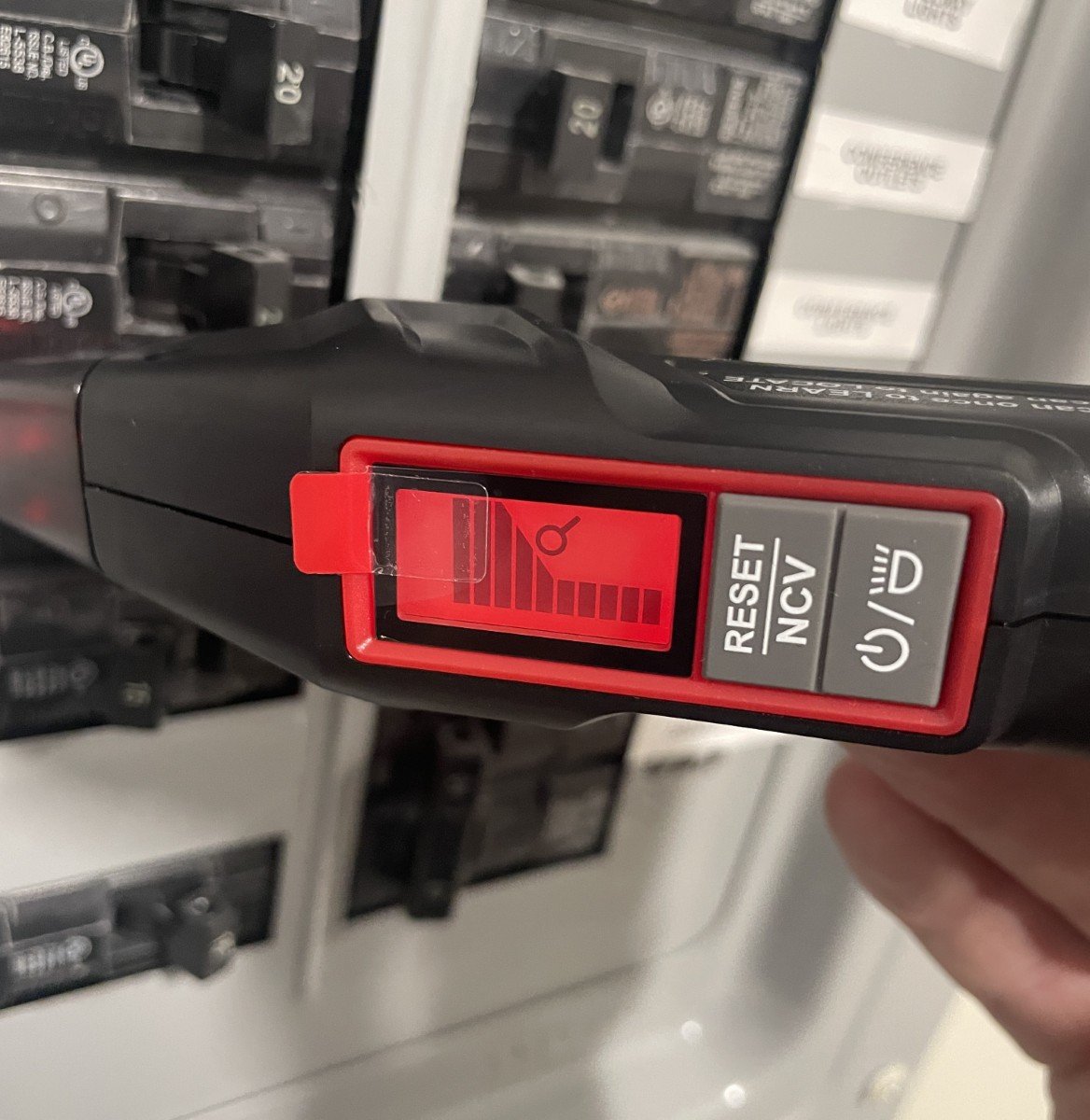
The KT301P is a handy-dandy voltmeter and circuit tester that emits a signal detected by a handheld wand, making tracing outlets and lamp circuits easy. If you’ve ever spent time trying to figure out which circuit breaker is which, the KT301P is for you. It’s reliable, ruggedly built, a pleasure to use, and reasonably priced. Thank you and great job, !

🚚 Shipping & Tracking